Wat Phra Yai (the Big Buddha Temple) stands on Koh Faan, a small island connected to the northeast coast of Koh Samui by a short causeway, about 3 km from Samui International Airport. Its centrepiece
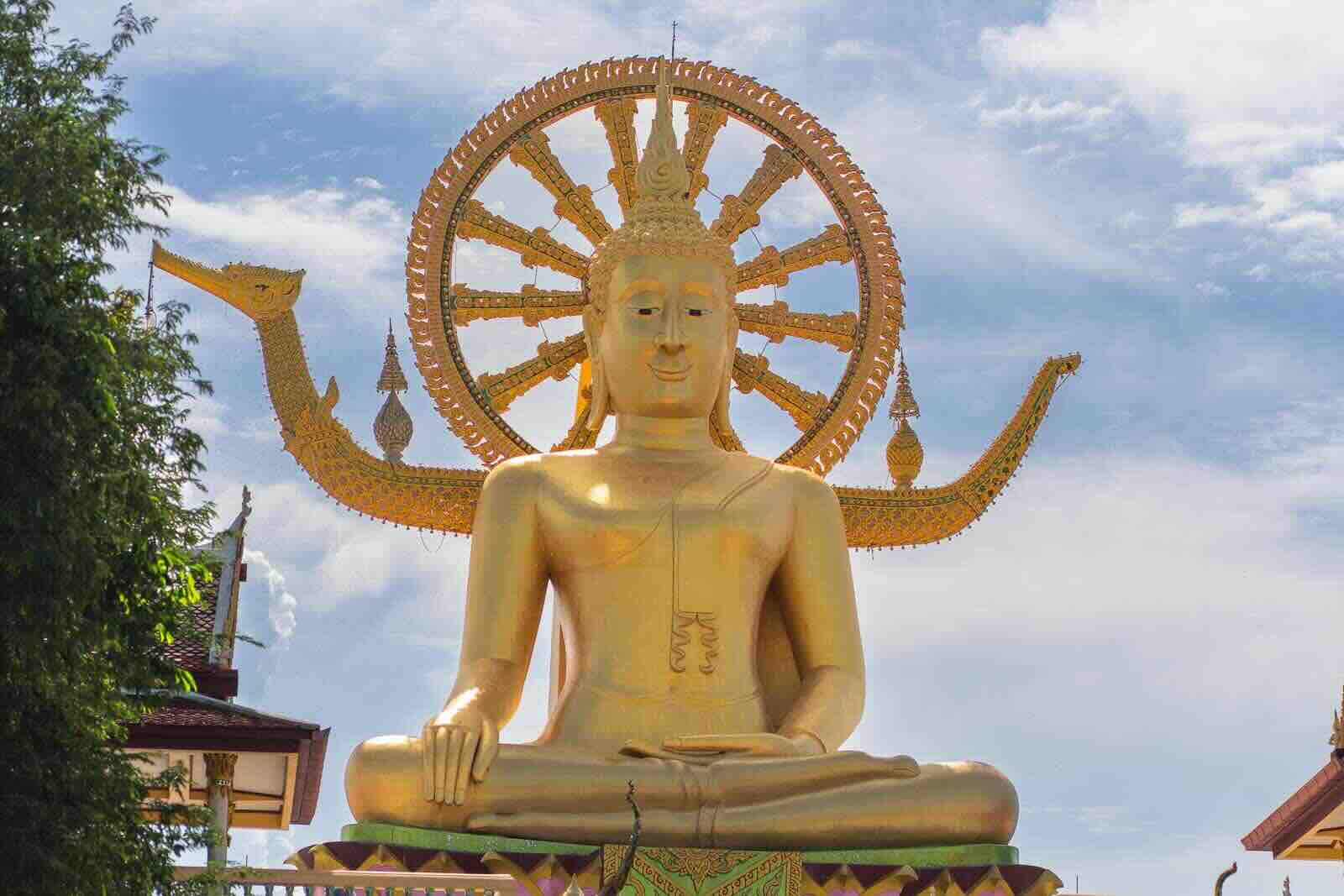
Wat Phra Yai (the Big Buddha Temple) stands on Koh Faan, a small island connected to the northeast coast of Koh Samui by a short causeway, about 3 km from Samui International Airport. Its centrepiece is a 12-metre-tall, gold-painted seated Buddha in the Mara posture, which has been one of Samui's most iconic landmarks since it was completed in 1972. The complex also includes a smaller Metteyya (future Buddha) statue, a ring of good-luck bells, naga-lined stairways and a small bazaar selling souvenirs and amulets.
The story
A little history
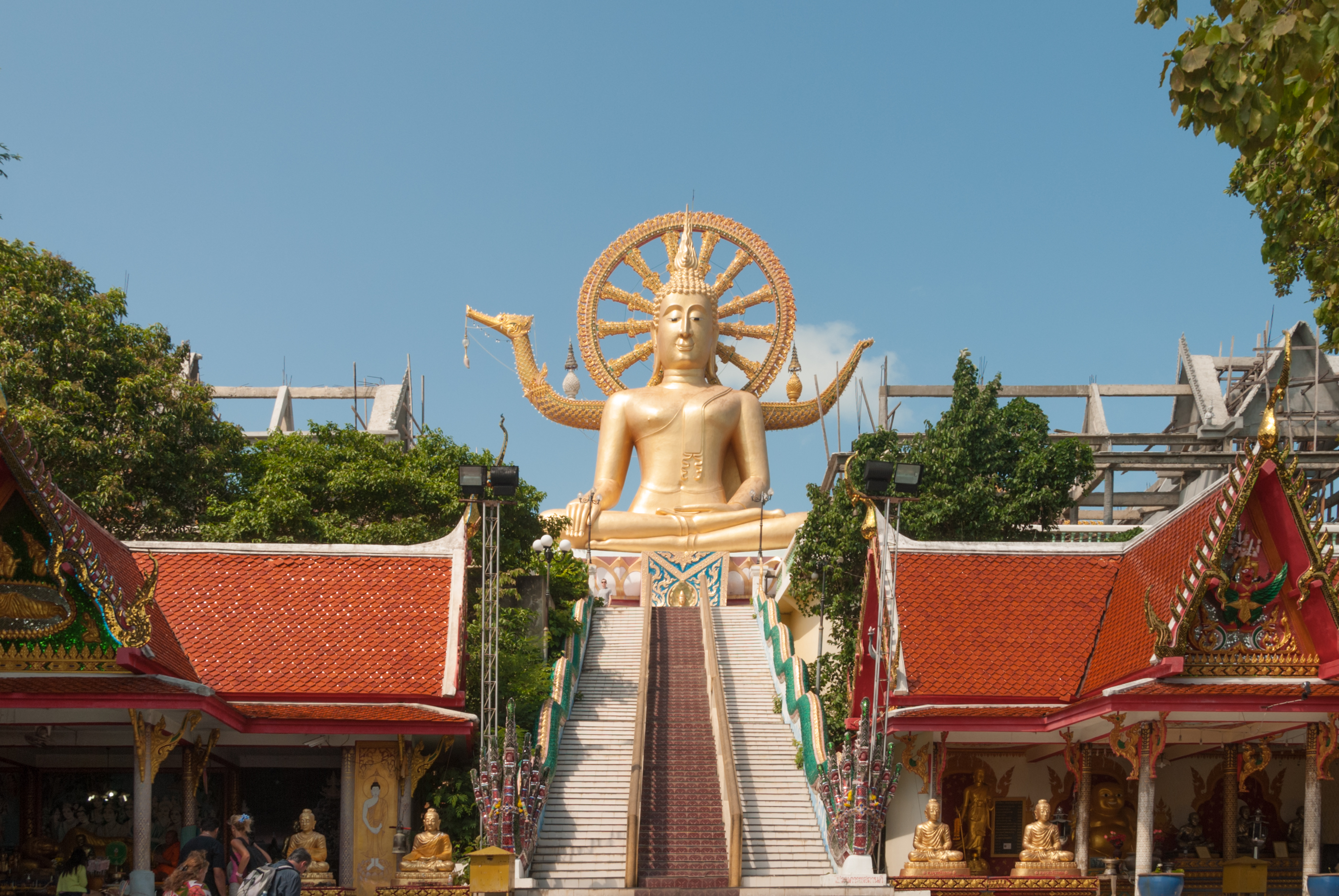
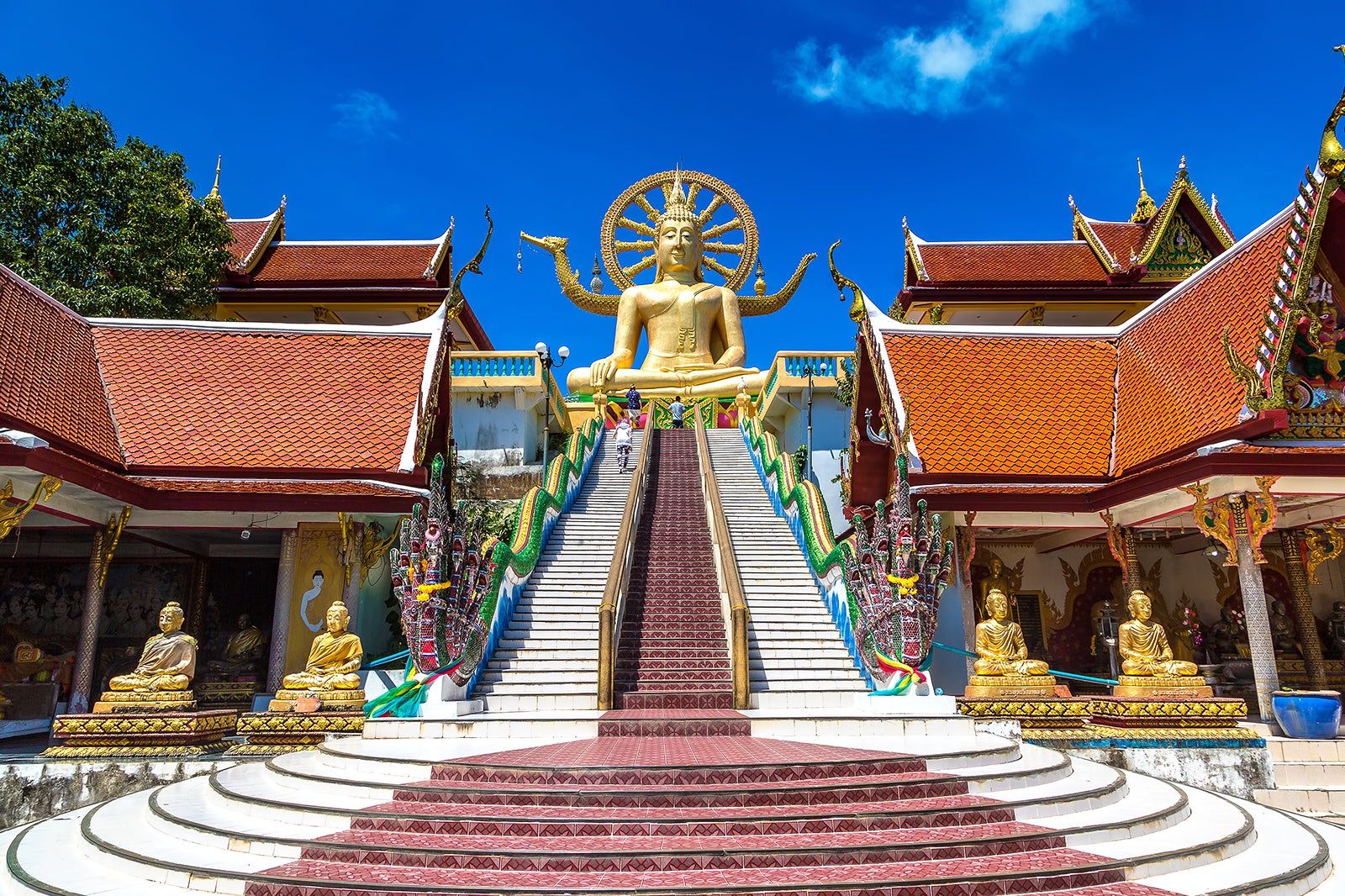
The 12-metre-high gold-painted Buddha statue was built in 1972 and quickly became one of Koh Samui's main tourist attractions and a major landmark. It depicts the Buddha in the Mara posture, symbolising calm, purity and resolve after overcoming the temptations and fears sent by Mara, the Lord of Illusion. The temple design blends animist, Brahmin and Buddhist elements, with naga statues lining the stairways and a second, smaller statue of Metteyya (the Buddha of the Future) beside the main image. A large Dhammachakra (Dharma wheel) was added behind the Buddha in 2012.
What to look for
Why it stays with you
- 12-metre (39 ft) gold-painted golden Buddha statue built in 1972
- Mara posture statue, symbolising the Buddha overcoming temptation and fear
- 73-step dragon-flanked staircase leading up to the statue terrace
- Panoramic sea views over the Gulf of Thailand and Big Buddha Beach from the terrace
- Ring of good-luck bells surrounding the temple complex
- Second smaller Buddha statue of Metteyya (Buddha of the Future)
Before you go
Plan your visit
Entrance fee
Free (donations welcome)
Opening hours
Daily 6:00-18:00
How long
45 min - 1 hour
Best time
Early morning or sunset for cooler temperatures and good light
Dress code
Shoulders and knees covered
Parking
Free on-site parking
From the field
Tips & notes
- Visit early in the morning or late afternoon to avoid the midday heat and the biggest crowds - the temple is busiest around 1 pm and there is little shade on the terrace.
- Dress modestly with shoulders and knees covered; sarongs can be rented or bought from vendors at the entrance if you arrive underdressed.
- Remove your shoes before entering temple buildings and ring the bells around the base of the statue - a tradition believed to bring good luck and drive away negative energy.
- Allow about 30 minutes to an hour and combine your visit with nearby Wat Plai Laem (roughly a 15-20 minute walk or short drive) and Big Buddha Beach.
- Bring cash for donations (entry is free but donations support the temple) and for souvenirs, amulets and Thai pancakes at the market stalls.
The place